

Our team is a scientific research group dedicated to the study of tumor metabolism and metabolic fatty liver disease. We are committed to addressing key scientific questions in this field and advancing the discipline through cutting-edge research methods and technologies.
Research Directions:
1. Chemical mechanisms and intervention strategies of tumor metabolic reprogramming.
2. Regulatory mechanisms and drug development for metabolic fatty liver disease.
Our research interest primarily lies in elucidating the regulatory mechanisms underlying metabolism-related diseases and conducting innovative drug discovery and development.
Major Research Achievements:
1. Discovered that enzymes involved in pyrimidine synthesis can form a complex spanning the mitochondrial outer membrane (termed the "pyrimidinosome"), which regulates de novo pyrimidine synthesis and ferroptosis, and facilitates the export of nitrogen from glutamine via dihydroorotate under hypoxic conditions (a novel ammonia metabolism pathway).
2. Identified a new pathway for cellular fatty acid uptake and elucidated its significant role in the development and progression of tumors and fatty liver disease.
3. Revealed the chemical nature and molecular mechanism by which electron accumulation (reductive stress) drives metabolic reprogramming and induces cell death, and proposed a theoretical model that can predict novel findings.
Research findings have been published in prestigious international journals such as Cancer Cell, Nature Cell Biology (2 papers), Nature Communications (4 papers), Journal of Experimental Medicine (2 papers), Science Advances, and The EMBO Journal. We have proposed the "Electron Transfer Balance Theory," providing a theoretical framework for tumor metabolic reprogramming. We discovered and defined the "pyrimidinosome," revealing its physiological significance and regulatory mechanisms, which has been highly praised by international peers as a "breakthrough in the field."
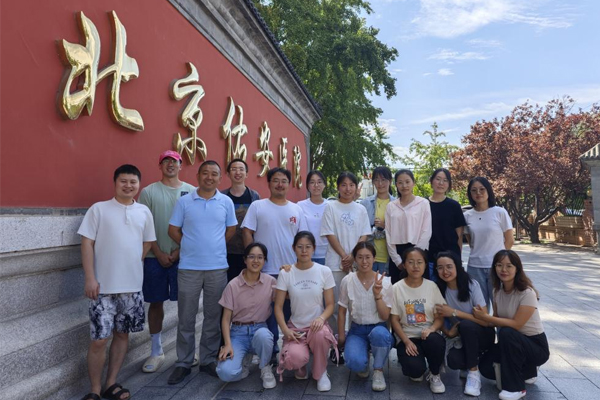
Team members include some young key members along with postdoctoral fellows and graduate students.
Representative Publications:
1. Zhai X, Yang R, Chu Q, Guo Z, Hou P, Li X, Bai C, Lu Z, Qiao L, Fu Y, Niu J, Li B*. AMPK-regulated glycerol excretion maintains metabolic crosstalk between reductive and energetic stress. Nat Cell Biol, 27(1):141-153. doi:10.1038/s41556-024-01549-x. (2025)
2. Yang C, Zhao Y, Wang L, Guo Z, Ma L, Yang R, Wu Y, Li X, Niu J, Chu Q, Fu Y, Li B*. De novo pyrimidine biosynthetic complexes support cancer cell proliferation and ferroptosis defense. Nat Cell Biol, 25(6):836-847. doi: 10.1038/s41556-023-01146-4. (2023). Comment in “The pyrimidinosome is cancer's Achilles' heel. Nat Cell Biol, 25(6):798-799. doi: 10.1038/s41556-023-01159-z (2023)”; Comment in “The pyrimidinosome: Orchestrating pyrimidine biosynthesis and ferroptosis defense. Mol Cell, 83(16):2837-2839. doi:10.1016/j.molcel.2023.07.013 (2023)”.
3. Li L*, Wang X, Hu K, Liu X, Qiu L, Bai C, Cui Y, Wang B, Wang Z, Wang H, Cheng R, Hua J, Hai L, Wang M, Liu M, Song Z, Xiao C*, Li B*. ZNF133 is a potent suppressor in breast carcinogenesis through dampening L1CAM, a driver for tumor progression. Oncogene, 42(27):2166-2183. doi: 10.1038/s41388-023-02731-5. (2023)
4. Chu Q, An J, Liu P, Song Y, Zhai X, Yang R. Niu J, Yang C, Li B*. Repurposing a tricyclic antidepressant in tumor and metabolism disease through fatty acid uptake inhibition. J Exp Med, 220(3):e20221316. doi: 10.1084/jem.20221316. (2023). Comment in “Stopping the fat: Repurposing an antidepressant for cancer treatment. J Exp Med, 220 (3):e20222097. doi: 10.1084/jem.20222097 (2023)”.
5. Chu Q, Liu P, Song Y, Yang R, An J, Zhai X, Niu J, Yang C, Li B*. Stearate-derived very long-chain fatty acids are indispensable to tumor growth. EMBO J, 42(2):e111268. doi: 10.15252/embj.2022111268. (2023)
6. Yang R, Yang C, Ma L, Zhao Y, Guo Z, Niu J, Chu Q, Ma Y, Li B*. Identification of purine biosynthesis as an NADH-sensing pathway to mediate energy stress. Nature Commun, 13(1):7031. doi: 10.1038/s41467-022-34850-0. (2022)
7. Zhong B, Liu M, Bai C, Ruan Y, Wang Y, Qiu L, Hong Y, Wang X, Li L*, Li B*. Caspase-8 induces lysosome-associated cell death in cancer cells. Mol Ther, 28(4):1078-1091. (2020)
8. Liu M, Wang Y, Yang C, Ruan Y, Bai C, Chu Q, Cui Y, Chen C, Ying G, Li B*. Inhibiting both proline biosynthesis and lipogenesis synergistically suppresses tumor growth. J Exp Med, 217(3): e20191226. doi: 10.1084/jem.20191226. (2020)
9. Wang Y, Bai C, Ruan Y, Liu M, Chu Q, Qiu L, Yang C, Li B*. Coordinative metabolism of glutamine carbon and nitrogen in proliferating cancer cells under hypoxia. Nat Commun, 10(1):201. doi:10.1038/s41467-018-08033-9. (2019)
10. Zhang J, Wang X, Cui W, Wang W, Zhang H, Liu L, Zhang Z, Li Z, Ying G, Zhang N, Li B*. Visualization of caspase-3-like activity in cells using a genetically encoded fluorescent biosensor activated by protein cleavage. Nat Commun, 4:2157. doi:10.1038/ncomms3157. (2013).
 OA system
 Email system


